|
|
|
 
|
|||||||||||||||||||||||||||||||||||||||||||||||||||||||||||||||||||||||||||||||||||||||||||||||||||||||||||||||||||||||||||||||||||||||||||||||||||||||||||||||||||||||||||||||||||||||||||||||||||||||||||||||||||||||||||||||||||||||||||||||||||||||||||||||||||||||||||||||||||||||||||||||||||||||||||||||||||||||||||||||||||||||||||||||||||||||||||||||||||||||||||||||||||||||||||||||||||||||||||||||||||||||||||||||||||||||||||||||||||||||||||||||||||||||||||||||||||||||||||||||||||||||||||||||||||||||||||||||||||||||||||||||||||||||||||||||||||||||||||||||||||||||||||||||||||||||||||||||||||||||||||||||||||||||||||||||||||||||||||||||||||||||||||||||||||||||||||||||||||||||||||||||
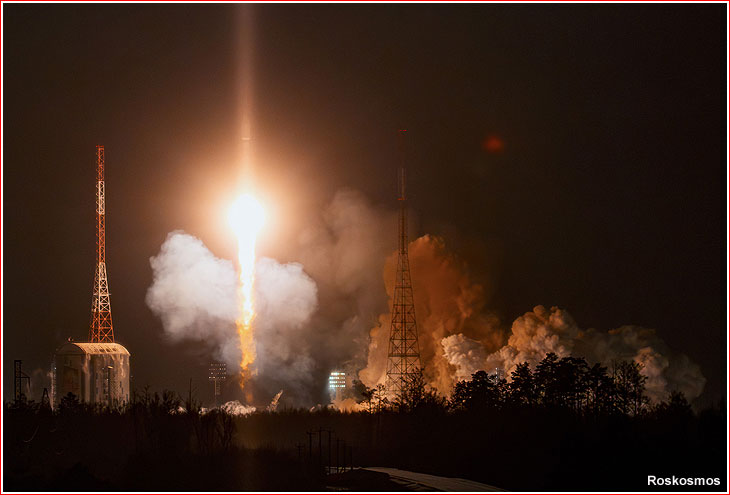
Soyuz rocket launches the Aist-2T pair, Iranian satellites A Soyuz-2-1b/Fregat rocket closed Russia's orbital launch attempts in 2025 with a mission delivering a pair of Aist-2T Earth imagers and 50 hitchhiking payloads, including a trio of Iranian satellites, on December 28.
Aist-2T mission at a glance:
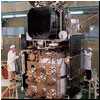
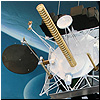
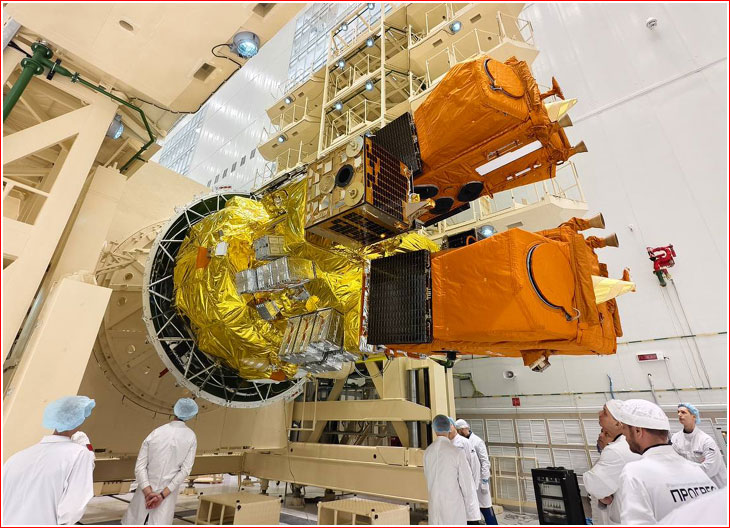
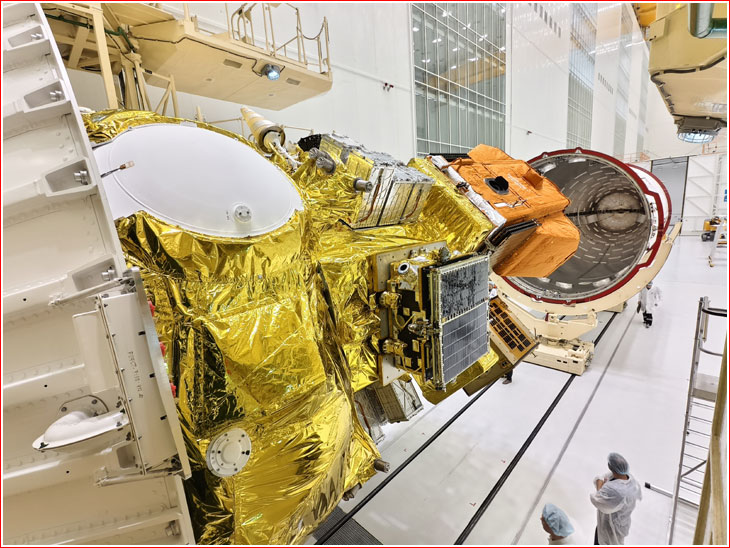
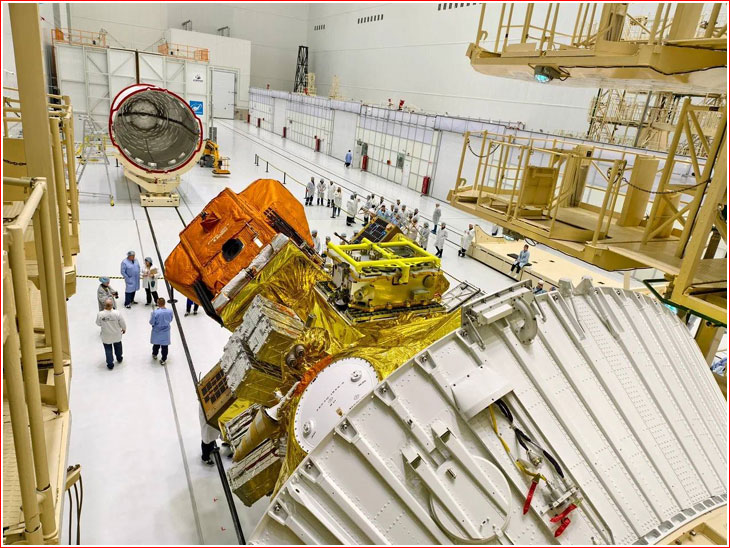
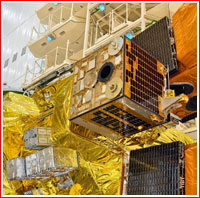
The dual-purpose Aist-2T satellite with a mass of 670 kilograms, was developed at RKTs Progress in Samara under a 2019 contract with the Roskosmos State Corporation, which ordered a two-spacecraft system producing stereo-imaging of the Earth surface from a Sun-synchronous orbit. The stereo imagery would be possible thanks to a dual set of cameras on each Aist-2T (instead of one on the previous-generation Aist-2D, launched in 2016, making it possible to photograph each area under a slightly different angle. The Aist-2T satellite was reported to be capable of capturing images with a resolution as high as 1.6 meters, when photographing in nadir (directly below its flight path) in pan-chromatic mode. In the same imaging mode, it could also produce stereo images with a resolution up to 1.9 meters. Multi-spectral and color imagery was reported to be possible with a resolution of 4.8 meters when pointing in nadir or up to 5.9 meters for stereo sets of photos. The Aist-2T variant also featured a built-in propulsion system for the first time, while the satellite's downlink channel for sending imaging data back to Earth was expanded from 150 megabits per second on Aist-2D to 1,600 megabits per second on the 2T version. As of February 2020, the Aist-2T pair was scheduled for launch in November 2022, but by 2021, it slipped to 2023 and was later re-scheduled for Dec. 25, 2024. By mid-October 2024, the mission was postponed again, until at least March 17, 2025, and by the end of 2024, it was rumored to be delayed until June 26, 2025. Early in 2025, the launch slipped to the end of August 2025 and, ultimately to December of the same year. Secondary payloads
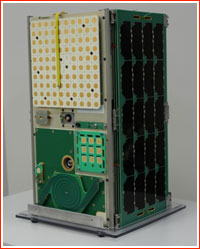
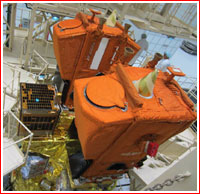
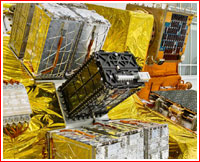
In addition to the launch of the Aist-2T pair, the same Soyuz-2-1b rocket was also booked to carry 50 dual-purpose secondary payloads, ranging from light-weight experimental satellites down to an assortment of educational cubesats and a small carrier platform, itself designed to release the tiniest satellites known as pikosats. A total of 33 payloads were to be deployed from 17 launch containers provided by Moscow-based Aerospeis Kapital. The most notable secondary payloads on the mission were two Marafon-IoT experimental satellites (INSIDER CONTENT), developed at ISS Reshetnev and intended for paving the way to the so-called Internet-of-Things satellite system, however, by the time they reached the launch pad, the main project was facing cancellation due shrinking Russian space budget. The most significant foreign payload on the Aist-2T mission was a trio of Iranian dual-purpose satellites all intended for remote-sensing of the Earth's surface. Other small foreign payloads were ordered by various institutions in Montenegro, Kuwait, Qatar, Ecuador and Belarus. Also, the St. Petersburg-based STTs government-supported center reported sending a total of eight small payloads on the Aist-2T mission. A group of CubeSats from the Sitroniks Group for the Automated Indentification System, AIS, and for the Internet of Things, IoT, was also onboard. The payload fairing of the rocket also carried a logo of the Pixidex company from South Africa, which specialized in equipment for suppressing drones, but it was not immediately clear which satellite carried its payload.
Payloads aboard the Soyuz launch on Dec. 28, 2025:
Launch campaign
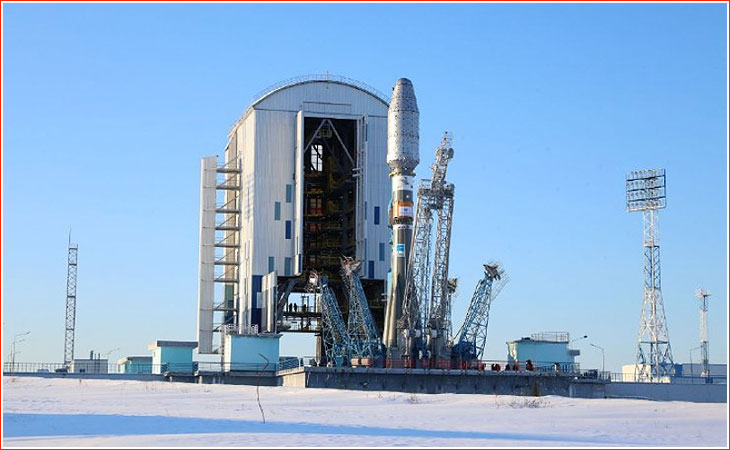
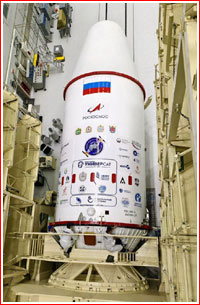
The Soyuz launch vehicle for the Aist-2T mission was delivered by rail from Samara to Vostochny in mid-November 2024. On Oct. 31, 2025, Roskosmos announced the start of work with the Fregat upper stage for the Aist-2T mission in Vostochny. The space tug was extracted from its transport container and placed at its work site inside the spacecraft processing building for upcoming pneumatic and electric tests. Upon their completion, the stage was to be ready for delivery to the fueling station, ZNS, for propellant and pressurized gases loading, which would represent irreversible operations and kick off the active launch campaign, but at the time, Roskosmos did not mention the launch date for the mission. According to unofficial sources, by early November 2025, the industry committed to launching the mission on Dec. 28, 2025. The electric and pneumatic-vacuum tests of the Fregat upper stage were completed by Nov. 20, 2025, and the space tug was reported sent to fueling with propellant and pressurized gases. The critical meeting of the State Commission overseeing the launch was scheduled for Dec. 5, 2025, and it apparently confirmed the readiness of the mission for Dec. 28, 2025, launch. On Dec. 8, 2025, Roskosmos reported ongoing assembly of booster stages for the Soyuz-2.1b rocket, secondary payloads and the main payload section for the mission in Vostochny. The state corporation also confirmed the completion of Fregat fueling operations but still did not mention the planned launch date for the mission. The integration of the four boosters of the first stage with the core booster of the second stage was reported completed on Dec. 11, 2025. An Il-76 transport aircraft with a pair of Aist satellites landed at Vostochny's airport on Dec. 15, 2025. By Dec. 23, 2025, the assembly of the payload section was completed and it was encapsulated under the 81KS payload fairing of the Soyuz rocket. The next day, the payload section was transferred to the Vehicle Assembly Building, MIK RN, where it was integrated with the third stage of the Soyuz launch vehicle, which in turn was connected to the booster stages of the rocket, completing the assembly of the vehicle. The next day, the State Commission overseeing the launch cleared the vehicle for the rollout to the launch pad, which proceeded as planned on the morning local time in Vostochny on Dec. 26, 2025. Launch profile 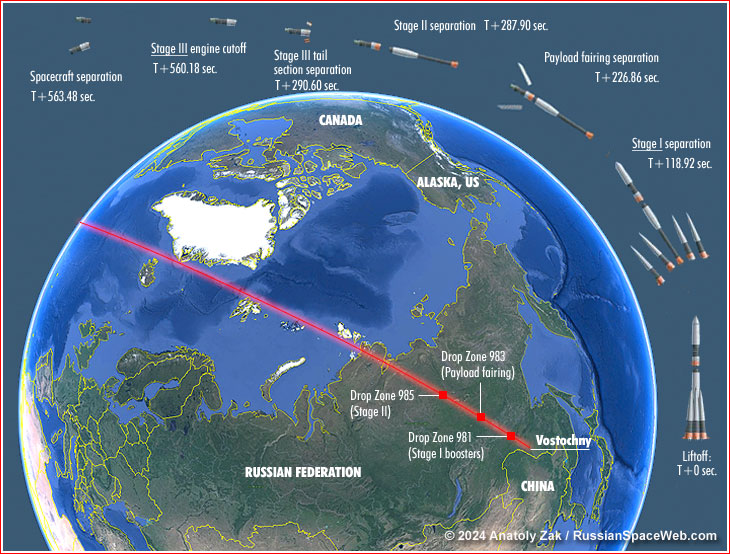
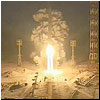
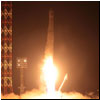
A Soyuz-2.1b rocket carrying the Aist-2T pair and secondary payloads lifted off from Site 1S in Vostochny on Dec. 28, 2025, at 16:18:05.462 Moscow Time (8:18 a.m. EST). After a few seconds of vertical ascent under the power of the four boosters of the first stage and the core booster of the second stage, the rocket headed northwest across eastern Russia, aligning its trajectory with a near-polar orbit inclined around 98.57 degrees toward the Equator and an azimuth of 344.13 degrees. The strap-on boosters of the first stage should separated 1 minute 59 seconds after liftoff (Launch+118.9 seconds) in order to crash at Drop Zone No. 981 in the Amurskaya Oblast (Amur Region) on the border between the Tynda and Zeya Districts. The fairing protecting the payload then split in two halves and separated during the operation of the second stage at 3 minutes 48 seconds in flight (L+228.4 seconds). As a result, the payload fairing fragments should have fallen at Drop Zone No. 983 in the Aldan District in the Sakha (Yakut) Republic. Moments before the second stage completed its firing 4 minutes and 48 seconds into the flight, the RD-0124 engine of the third stage began to fire through the inter-stage lattice structure, which moments later separated along with the second stage 4 minutes and 48 seconds after liftoff (L+287.9 seconds). Just 1.5 seconds later (L+291.8 seconds), the tail section on the third stage split into three segments. Both, the second-stage booster and the segments of the tail section were to impact the ground at Drop Zone No. 985, in the Vilyusk District, located farther north in the Sakha Republic. The third stage continued firing, inserting the Fregat upper stage and its passengers into an orbit with an apogee (highest point) of 196 kilometers and a perigee of just 12 kilometers or well in the dense atmosphere. As a result, after its engine cutoff and separation from Fregat, 9 minutes 24 seconds after liftoff (L+563.7 seconds), the third stage began a long free fall back to Earth over the Arctic and Northern Atlantic Oceans. Its trajectory was designed to bring the flaming debris of the booster crashing into the Atlantic Ocean. Space tug flight profile Following its split from the third stage at 16:27 Moscow Time, the Fregat was programmed to fire its engine over the Arctic Region 9 minutes 29 seconds after liftoff for around 1.5 minutes to ensure its insertion into a transfer orbit. The stack then climbed passively for around 46 minutes before Fregat fired for the second time near the apogee of its initial orbit, this time over the Antarctica, around 59 minutes 40 seconds after liftoff. The maneuver, lasting less than a minute, inserted the vehicle into a nearly circular orbit around 830 kilometers above the Earth's surface. The primary payload — a pair of Aist-2T satellites — ejected from Fregat's payload adapter, completing the main task of the mission 1 hour 4 minutes and 18 seconds after liftoff. Roskosmos confirmed the successful release of the Aist-2T satellites slightly more than an hour after the liftoff, adding that the deployment of 50 secondary payloads was ongoing. According to the flight plan, a total of 48 secondary payloads were to be released in the second target orbit formed by the Fregat upper stage, followed by an additional space tug maneuvers to enter the third target orbit for the deployment of the two Marafon-IoT experimental satellites (INSIDER CONTENT). The STTs center, which launched eight of its small satellites with the Aist-2T mission, later reported that the command to release its first payload was issued 2.5 hours after the launch and was followed by the commands to deploy its subsequent satellites in next nine minutes:
The company also said that its first communications session with all eight of its payloads took place at 19:23:01 Moscow Time on Dec. 28, 2025. Before the end of Dec. 28, 2025, Roskosmos confirmed the successful separation of secondary payloads in multiple groups, including a Zorky-2M dual-use imaging satellite. After the release of its final passenger around five hours after its liftoff from Vostochny, the Fregat was expected to conduct another pre-programmed maneuver to place itself on a reentry trajectory into the Earth's atmosphere and disintegrate over the Equatorial region in the eastern section of the Pacific Ocean. Around Jan. 5, 2026, the Iranian source Isna.ir reported that "as a result of a problem that arose during the orbital injection of the Paya satellite by the launch vehicle, significant focus was placed on stabilizing the satellite, and required corrective actions were executed with great accuracy." The spacecraft was reported successfully dielivering its first image by Jan. 6, 2026. By Jan. 8, 2026, the US Space Force cataloged 50 objects in an orbit with an inclination of around 97 degrees:
The majority of payloads were in a near-circular 500 kilometer orbit, but at least five objects were in the unexpected orbits. It appeared that the Fregat had failed to form its third target orbit and, as a result, the Marafon-IoT prototypes were released into a wrong orbit. Given the previous Iranian statement, it appears that the problems started during the release of the Paya spacecraft and, possibly, culminated with the failure of the Fregat to form its final target orbit, as well as preventing the space tug from performing its pre-programmed deorbiting burn. On Jan. 21, 2026, OKB Fakel announced first tests of its electric propulsion system with the SPD-70 engine installed aboard Aist-2T No. 1 satellite. Indeed, the US tracking data did show that one of the satellites, believed to be a member of the Aist-T pair, had boosted its orbit:
|
|
||||||||||||||||||||||||||||||||||||||||||||||||||||||||||||||||||||||||||||||||||||||||||||||||||||||||||||||||||||||||||||||||||||||||||||||||||||||||||||||||||||||||||||||||||||||||||||||||||||||||||||||||||||||||||||||||||||||||||||||||||||||||||||||||||||||||||||||||||||||||||||||||||||||||||||||||||||||||||||||||||||||||||||||||||||||||||||||||||||||||||||||||||||||||||||||||||||||||||||||||||||||||||||||||||||||||||||||||||||||||||||||||||||||||||||||||||||||||||||||||||||||||||||||||||||||||||||||||||||||||||||||||||||||||||||||||||||||||||||||||||||||||||||||||||||||||||||||||||||||||||||||||||||||||||||||||||||||||||||||||||||||||||||||||||||||||||||||||||||||||||||||

|