|
|
  
|
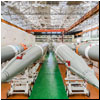
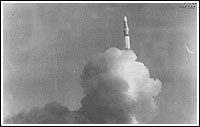
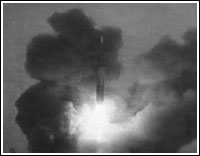
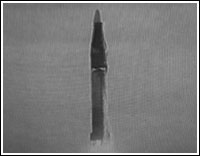
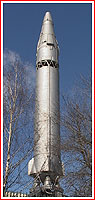
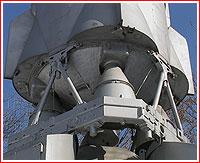
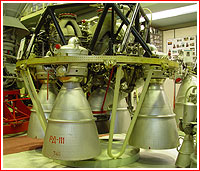
The R-9 intercontinental ballistic missile The R-9 ICBM was under development at the OKB-1 design bureau from 1959 and serially produced at Progress plant in Kuibyshev (now Samara) (INSIDER CONTENT). The vehicle first flew from Tyuratam in 1961 and it was formally accepted into the armaments of the Soviet Strategic Missile Forces, RVSN, in 1965. Some missiles of that type remained operational until 1989. (78)
In the R-9 project, OKB-1 tried to address deficiencies of the R-7 design, the first Soviet ICBM, primarily its huge size, which made it practically impossible to deploy the rocket in protected underground silos. The R-9 was made far more compact than R-7 and used super-chilled liquid oxygen oxidizer in order to condense its volume. Despite all the efforts, the cryogenic propellants could not compete with hypergolics, such as dimethylhydrazine and nitrogen tetroxide pair, in terms of long-term storage, thus leading to only a limited number of the R-9-type missiles being operationally deployed by the Soviet military. The situation essentially repeated the move by the US Air Force, which quickly phased out the cryogenically fueled Atlas ICBMs in favor of Titan family of missiles relying on hypergolic propellants. However, the experience from the R-9 project later influenced the development of the N1 Moon rocket, which also relied on kerosene-liquid-oxygen engines.
Technical specifications of the the R-9A rocket:
|
|
 |