|
|
    
|
|||||||||||||||||||||||||
Soyuz launches navigation satellite from Plesetsk A Soyuz-2 rocket launched a GLONASS satellite from Plesetsk in the late hours of Sept. 17, 2026, the second mission to replenish Russia's dual-use navigation constellation in less than a month.
The Sept. 17, 2026, Soyuz launch from Plesetsk at a glance:
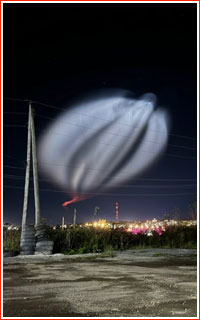
In mid-September 2026, Russian authorities announced air and sea navigation restrictions, NOTAMs, that matched the ascent trajectory for such missions as GLONASS. The expected launch coincided with a number of reports about technical issues with in-orbit GLONASS satellites which could require urgent replacements. The window extended from Sept. 17 to Sept. 29, 2026, from 11:00 to 23:59 Moscow Time. One restricted area was in the Komi Republic, which matched the drop zone for the payload fairing and the first stage of the Soyuz rocket. Simultaneously, a drop zone was set up in the Pacific Ocean, where the third stage of the same rocket would fall after separating from the Fregat upper stage, just short of orbital velocity. Soon thereafter, authorities in the Tyumen Region of Russia warned about the planned impact of rocket debris in the Uvatsky District, which would normally be used for the impact of the second stage during routine GLONASS launches. Issued just 24 hours ahead of the opening of the launch window, it was unusually short notice in comparison with previous NOTAMs for launches from Plesetsk, possibly representing a new tactic in response to the continuous threat from Ukrainian strikes against the spaceport. Liftoff In the evening of Sept. 17, 2026, multiple eyewitnesses in the cities of Solikamsk, Kirov, Nizhni Novgorod, Veliky Ustyug as well as across the Perm Region and the Komi Republic reported seeing the typical "jellyfish" effect in the sky usually associated with launches from Plesetsk. The event was reported to be seen around 21:55 local time (19:55 Moscow Time). The Russian Ministry of Defense nor official Russian media made immediate statements about the launch. On the morning of Sept. 18, Roskosmos announced that the Ministry of Defense had conducted the launch of a Soyuz-2-1b rocket with a military spacecraft. It followed with a standard text about military launches which would previously have been published by the Ministry of Defense, stating that the launch was nominal, that the assets of the Titov Chief Test Center tracked the vehicle, that the spacecraft reached its target orbit as planned and that it was taken under control by ground facilities of the Aerospace Forces, VKS. The final wording about stable telemetry contact with the spacecraft and nominal functioning of its systems was also present. However, as it became customary in 2026, no time was reported for the launch. The Ministry of Defense then also posted the same statement. The publicly released videos of the liftoff showed lightning towers specific to Pad 3 at Site 43 in Plesetsk. On the same day, the US Space Force cataloged two objects with orbital parameters which left no doubt that a Fregat upper stage carried a GLONASS satellite:
|
|

|