| |
|
  
|
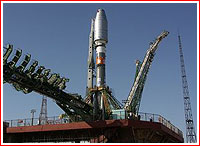
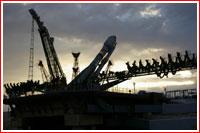
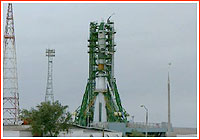
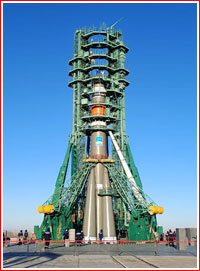
Site 31 for the Soyuz rocket family The second launch facility for the R-7-based launch vehicles at Site 31 in Tyuratam was built in the 1950s but it received an official designation 17P32-6, or Pad No. 6 for short, in the 1980s, years after four more pads for the same rocket family were introduced in Plesetsk. Soon thereafter, the Tyuratam test range itself became Baikonur Cosmodrome.
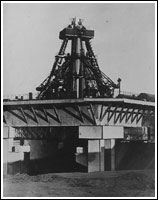
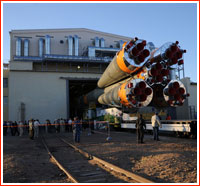
History of Site 31 and 32 At the end of 1958, a year-and-half after the R-7 ballistic missile had began flying, the second launch complex for the same rocket was founded at Site 31, east of the original launch facilities in Tyuratam. Unlike the test launch complex at Site 1 and 2, the Site 31 facility was planned as an operational and training "battle station" for the R-7 missile. The new complex included the launch pad (Facility 353), the MIK assembly building (sometimes referred to as TP-2 from the Russian Tekhnicheskaya Pozitsiya 2), the MIK GCh building for the processing of the nuclear warhead, disel-powered energy generating facility and the new residential complex at Site 32. Based on experience gained during the construction at Site 1 and 2, the flame trench at Site 31 launch pad was scaled down in comparison to that of at Site 1. The assembly and support facilities were also placed much closer to the launch pad. The complex was completed at the end of 1960. On Feb. 27, 1961, the first R-7 ICBM lifted off from Site 31. As the R-7's role as a carrier of the nuclear weapons had diminished, Site 31 along with Site 1 was re-purposed for orbital launches, including missions with cosmonauts onboard. The facility could be used for access to orbits with four different inclinations toward the Equator. By the end of 1966, the fueling station designated 11G12 started operations providing fueling for piloted spacecraft, satellites and planetary spacecraft. The original Soyuz 7K-OK spacecraft and the 7K-L1 circumlunar vehicles were prepared for launch at the processing building at Site 31. However, on December 14, 1966, an on-pad explosion of a launch vehicle with the 7K-OK No. 1 spacecraft, which cost three lives, required urgent repairs at the facility. On Jan. 14, 1969, Soyuz-4 was launched from Site 31, followed by Soyuz-6 on October 11, Soyuz 8 on October 13 and Soyuz-9 on June 1, 1970. The first unpiloted Soyuz 7K-TM variant was launched from Site 31 on April 3, 1974. Another wave of piloted launches started in 1980 with the launch of Soyuz-36 on May 26 and Soyuz-39 on March 22, 1981. Yet another group of piloted launches came in the wake of the 1983 launch failure, which damaged a primary piloted launch pad at Site 1. Soyuz T-10 was launched from here on Feb. 8, 1984, followed by Soyuz T-11 on April 3 and Soyuz T-12 on July 17, 1984. As of 2006, out of 100 Russian piloted launches, a total of 12 lifted off from Site 31, according to Roskosmos. According to the Russian press, during 2005, the launch complex and the processing facilities at Site 31 was being refurbished for the Soyuz-2 rocket. Crew missions return to Site 31 In 2009, to support the anticipated increase of the International Space Station crew from three to six, Russia had to double piloted launches from two to four annually. The number of Progress cargo supply missions was to increase as well. As a result, various upgrades were conducted at Site 31 during 2007 and 2008, to enable piloted launches from both Site 1 and Site 31, Kazakhstan Today reported, quoting Baikonur officials. Upgrades covered the fueling system and the flight control bunker. Also, a new air-conditioning system for the payload section of the rocket, a clean room and communications cables were installed. At the time, the first launch of the Progress spacecraft from Site 31 was expected in 2008 and the first piloted Soyuz (since 1984) would blast off from the same pad in 2009. In reality, the first cargo ship, Progress M-66, lifted off from Site 31 on Feb. 10, 2009. Progress M-07M and Progress M-15M were also launched from the same pad on Sept. 10, 2010, and April 20, 2012, respectively. In April 2011, the head of Roskosmos, Anatoly Perminov, said that Site 31 would be ready for piloted launches by the end of that year. Manned launches did resume from Site 31 on October 23, 2012, when Soyuz TMA-06M lifted off. Moving both -- piloted and cargo launches -- to Site 31 would enable Roskosmos to start planned refurbishment of the launch pad at Site 1, which apparently was planned to start around 2014. Upgrades for Fregat-SB During 2009, a processing building at Site 31 -- MIK 40 -- was upgraded with a new work place for handling the Fregat-SB upper stage, which would be used with the Zenit-3M (Zenit-2SLB) rocket. On Dec. 28, 2011, during the launch of the Soyuz-2.1a rocket with a cluster of Globalstar-2 satellites, Pad No. 6 at Site 31 sustained some damage. Strong winter winds pushed the fiery exhaust from the rocket into the service gantry, causing its deformation and preventing proper rotation of the structure into the operational position around the launch vehicle. Repairs at the pad were expected to last until the end of February - beginning of March 2012. (553) 400th rocket lifts off from Site 31
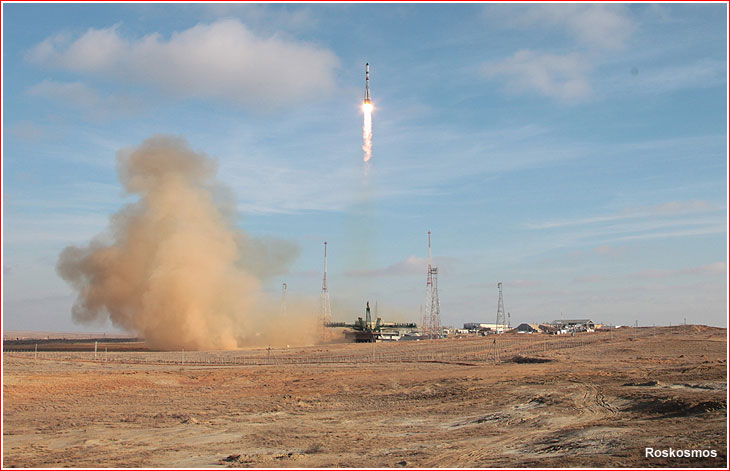
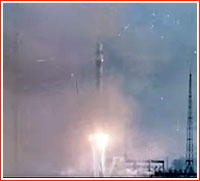
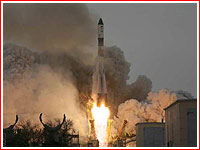
Progress MS-13 lifts off from Site 31 on Dec. 6, 2019. Completing Russian missions to the International Space Station, ISS, in 2019 and for the 2010s, the Soyuz-2-1a rocket lifted off from Baikonur on December 6, 2019, successfully sending the Progress MS-13 cargo ship on a three-day trek to the outpost. Counting 14 suborbital launches from Site 31, it was the 397th liftoff in the history of the facility. Then, on April 9, 2020, the first crew-carrying Soyuz-2-1a variant with the Soyuz MS-16 spacecraft lifted off from Site 31, marking the 400th launch from the facility, according to some accounts.
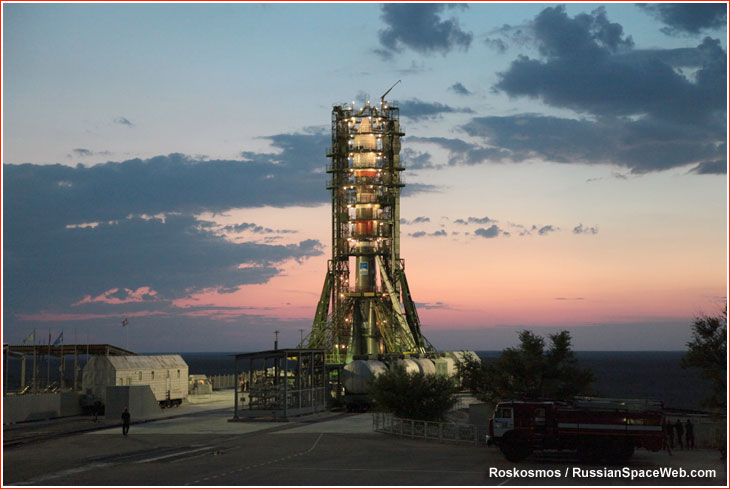
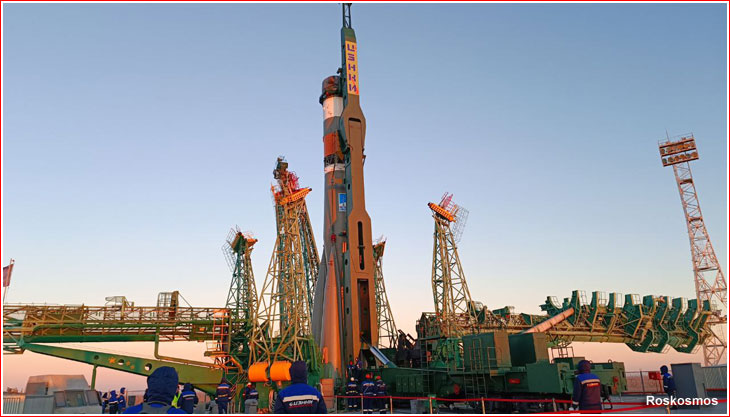
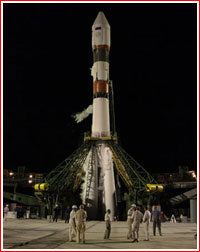
A Soyuz rocket without a payload is installed on the launch pad at Site 31 on Dec. 19, 2022. In August 2022, Semikhatov NPO Avotomatiki announced that a new domestically developed system for pre-launch diagnostics of launch vehicles would be installed on the launch facility, following just completed removal of the obsolete hardware. The new equipment was delivered to Baikonur in September 2022 and, from December 19 to December 22 of the same year, a Soyuz-2-1a vehicle intended for the launch of the Porgress MS-22 spacecraft was on Pad 6 for integrated tests of the just installed hardware but without fueling of the vehicle. Russia's only pad for crew launches suffers major damage
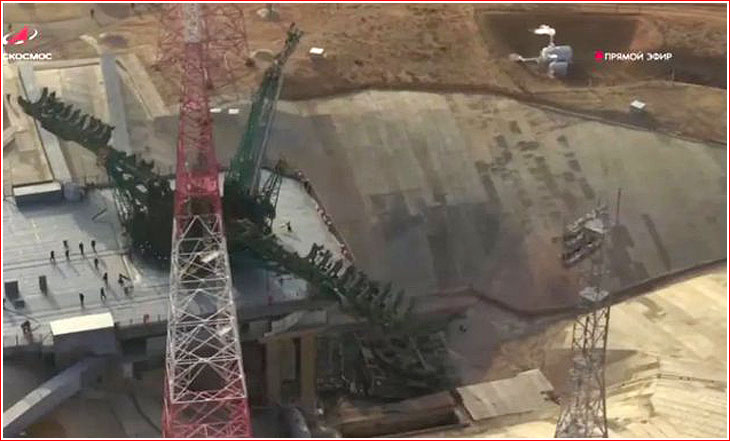
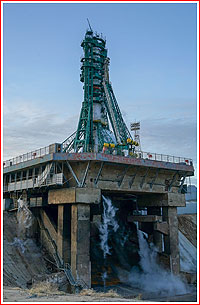
The debris from the fallen service platform are visible at the bottom of the flame trench at Site 31 shortly after the launch of Soyuz MS-28 on Nov. 27, 2025.
|
|

|